
Consolidation – July 2025 to January 2026
Following the extraordinary momentum achieved in the first semester of 2025, the Karno-Ruthenian Empire entered the second half of the year with renewed confidence, deepening its diplomatic reach, cultural influence, and institutional maturity. The period from July 2025 to January 2026 stands as one of consolidation, prestige, and international visibility.

On 5 July, in the immediate aftermath of another triumphant participation at MICROCON 2025 in Montreal, the Empire formally confirmed the dispatch of a delegation to MICROCON Europe 2027, reaffirming its commitment to sustained engagement at the highest levels of the micronational world.
The following day, 6 July, reflected the social and multicultural character of the Empire. The Emperor attended events with the Greek community residing near Persenburg, while the Empress and the Dowager Duchess of Calvi dedicated themselves to charitable initiatives, underscoring the Crown’s close relationship with both cultural minorities and humanitarian causes.

On 11 July, the Empire announced a significant academic and strategic undertaking: a joint expedition by the First Army of Karnia-Ruthenia, the Imperial and Royal Academy of Geographical and Social Studies, and the Historical Institute of Quinta Velha, demonstrating the integration of scholarship, military expertise, and historical research in imperial policy.
The following day, 12 July, marked one of the most vibrant days in micronational history. The Empire hosted the Delveran Heritage Festival, the largest domestic event ever held by any micronation, alongside the election of the Delveran Consul, an expedition to the Treaty of Tordesillas landmark, and the Empress’s attendance at a German cultural festival. On this occasion, the Empire formally congratulated Chancellor Dylan Callahan on his election and renewed term as Consul of Delvera.

Dynastic and chivalric traditions took center stage on 18 July, when the Pannonian Royal Couple celebrated their 38th wedding anniversary and bestowed the Order of the Heartsease for the second time. During the ceremony, the Emperors of Karnia, the Kings of Huzul, and several Archdukes were formally inducted, reinforcing inter-dynastic bonds.
On 23 July, further honors were conferred as the Duke of Marienburg awarded the Order of the Oak to the Emperor, the Empress, and Prince Jordam Brizendine. At the same ceremony, Princess Stephanie Brizendine von Warwick and Princess Hannah Callahan von Wexford received the Order of Mines and Baths.
Diplomatic outreach continued into August. On 9 August, the Empire recognized the Kingdom of Duvalen and the Kingdom of Norvendria, expanding its European diplomatic network.
A highly anticipated dynastic reunion occurred on 12 August, when the Kings of Pannonia arrived in the imperial capital to celebrate Empire Day and the Emperor’s birthday, joining the Empress, the Dowager Duchess of Calvi, and Countess Neulenburg in what was described as an intimate family celebration of state and tradition.
In September, the imperial couple maintained their presence at Calvi Fortress, spending the weekend of 19 September at the historic residence.
October unfolded as a month of cultural and political significance. On 7 October, the Emperor and Empress received the Bachelor of Cananéia and Margravine Szentgerald at Calvi Fortress. The following day, 8 October, marked the foundation of Eutérpia, with Empress Sania proclaimed its reigning Queen, a notable expansion of her sovereign and cultural roles.

On 12 October, the Emperor received Thomas, King of Quinta Velha and Secretary-General of the Conference of Santiago, in a meeting that included the signing of a treaty, the exchange of gifts, the investiture of the King of Quinta Velha as Knight of the Three Golden Fleeces, and a formal luncheon.
Further diplomatic developments followed on 27 October, when the Empire recognized the State of Cananéia.
November proved equally eventful. On 1 November, the Empress received Countess Neulenburg, Obersthofmeisterin of the Court in Persenburg, and Margravine Szentgerald. On the same occasion, the Empire recognized the Grand Duchy of Burgundy.
On 6 November, the Laurentian Micronational Cooperative Union announced Dylan Callahan as External Auditor, strengthening the Union’s financial oversight mechanisms and highlighting Karno-Ruthenian influence in multilateral structures.
Humanitarian and courtly duties converged on 17 November, when the Emperor and Empress, accompanied by the Dowager Duchess of Calvi and Countess Neulenburg, dedicated themselves to charitable works around Eutérpia, while also celebrating the birthday of Prince Hochbach at his new official residence, the Neues Palais.
On 22 November, the Empress attended a family celebration at the residence of Margravine Szentgerald, marking the birthday of Landgrave Michael von Szentgerald, godson of the Emperors.

Social inclusion was marked on 25 November, with the naturalization of the first citizen of Haitian origin. The following day, 26 November, international dialogue was fostered abroad when King Louis Philippe of Emina met with the Bachelor of Cananéia and Pedro Pinto, a veteran Portuguese micronationalist, during the Belém Summit in Lisbon, promoted as part of Cananéia’s grand diplomatic tour.
December crowned the year with intense cultural and diplomatic activity. On 3 December, the Empire recognized the Kingdom of Arlandica, followed on 5 December by the recognition of the Synetic Union.
On 11 December, the Emperor and Empress attended the launch of “Dom Pedro II – A Tragedy in Five Acts”, the debut work of Count Szentmária, in São Paulo, Brazil. Two days later, on 13 December, the Emperor received the Collar of the Most Serene Order of Our Lady of Navigators from the Bachelor of Cananéia. That same day, he was also awarded the Sash of the Grand Cross of the Three Orders, and made Grand Collar of the Portucalense Order, the Order of the Blue Wyvern, and the Order of the Fleur-de-Lis by the King of the Eminians. On this occasion, both the Emperor and Empress were elevated as Princes of Portuguesia and Dukes of Thieux-en-Saint-Théoton.
The year concluded with tradition and reflection: the Imperial Christmas Address on 24 December, followed by the publication of the annual list of honors on 25 December.
The dawn of 2026 continued the momentum. On 6 January, national citizens received foreign honors, reinforcing international esteem. On 9 January, Emperor Norton Day, the flags of Flandrensis and Karnia-Ruthenia were seen flying together in Treviso, Italy, drawing attention from Italian media.

Finally, on 11 January, the Convention of São Paulo brought together the largest micronational gathering in Brazil in recent years, with representatives from the Empire, Cananéia, the Synetic Union, and Braspor, closing this remarkable cycle with unity and forward vision.


Operation Tordesillas — Official Report and Visual Documentation Released
Persenburg, 02 September 2025 — The Imperial and Royal Government of Karnia-Ruthenia, through the Imperial General Headquarters, is pleased to announce the successful completion of Operation Tordesillas, a groundbreaking amphibious military endeavour conducted on 12 July 2025 on Cardoso Island, Cananéia, Brazil. This operation represents the first recorded amphibious landing ever executed by any micronational military force, marking a historic milestone in our martial and exploratory endeavours.
According to the official report published by the Government of Karnia-Ruthenia, the operation achieved all its objectives with commendable efficiency and valor. The strategic landing demonstrated the professionalism and readiness of our armed forces and underscored the Empire’s commitment to innovation in military capabilities.

In furtherance of transparency and to afford both citizens and international observers a firsthand account of Operation Tordesillas, the Imperial General Headquarters has released a video presentation featuring exclusive imagery from the landing. This visual dossier complements the formal report and provides an irrefutable record of the operation’s execution and scope.
The Imperial and Royal Government of Karnia-Ruthenia reaffirms its steadfast dedication to transparency, martial excellence, and the advancement of national prestige. Citizens and allied entities are hereby invited to review both the detailed report and the accompanying visual documentation to witness this historic achievement.
For additional information, further inquiries, or official commentary, members of the press and the public are encouraged to contact the Ministry of Foreign Affairs.
Ascendancy – January to July 2025
From the assertion of sovereignty and cultural magnificence to diplomatic distinction and humanitarian service, the first half of 2025 has unfolded as a golden chapter in the history of the Karno-Ruthenian Empire. Emboldened by strong leadership and guided by a sense of mission, the Empire has strengthened its global presence while deepening national pride and civic virtue.
The year opened with a firm geopolitical statement. On 11 January, the Empire formally denounced the Treaty of Masbahá, effectively asserting the independence of the territory of Takia, a move that underscored the Empire’s enduring commitment to national self-determination.
Shortly after, on 23 January, the Empire became a voting member of the Micronational Hall of Excellence, joining the ranks of the world’s most respected and influential micronations.
Cultural diplomacy made its presence felt when, on 30 January, the Emperor received postcards from Their Highnesses, the Prince and Princess of Aigues-Mortes, and from His Highness, the Archduke of Duckionary—a warm gesture of enduring friendship among sovereign houses.
A historic event followed on 1 February, when Oscar of Karnia and Sania of Freiburg married under imperial law. Sania became Empress, and for the first time in history, the imperial headship was shared between husband and wife, a profound development in both symbolic and practical governance.
The imperial couple continued their public duties with fervor. On 16 February, the Empress returned to Calvi Fortress after a week in Persenburg, during which they met with citizens around the capital and engaged in cultural activities.
Soon after, on 17 February, the Empire confirmed its second consecutive participation in MICROCON, the world’s foremost micronational summit. Diplomatic recognition and military planning accelerated in tandem. On 20 February, the Imperial Government launched a national campaign to attract volunteers to the Imperial Armed Forces. That same day, Emperor Oscar I was awarded the Grand Cord of the Supreme Order of Sublime Illumination by the sovereign of the Myeong Commonwealth, a distinguished Asian micronation of great cultural refinement.
The next day, on 21 February, the Empire recognized the Sultanate of Huajiangstan, initiating a productive series of relations with Asian micronations.
On 1 March, the Empire’s moral leadership was affirmed when Emperor Oscar I and Prince Brizendine received the Civic Virtue Award from the Republic of Verraland.
March became a month of familial and diplomatic activity. On 21 March, the Emperor traveled to Rio de Janeiro to celebrate the Empress’s birthday with her at Fortress Calvi. On 24 March, the Empress officially celebrated her birthday, surrounded by family and close friends at Fortress Calvi. That same day, she became a full member of all national orders of merit, an honor reflecting her growing role as co-sovereign and public figure.
On 26 March, he held a private meeting with the King of Taslavia, his cousin and fellow sovereign. On 29 March, the Emperor visited the State of Huzul to attend the birthday of his cousin’s daughter, Crown Princess Laura of Huzul, heir to King Eugene and Queen Beatriz.
April began with solemnity and reverence. As Easter approached, the Court of Persenburg entered mourning due the passing of Pope Francis, soon relieved by the joyful announcement of Leo XIV as the new Pope, warmly received by the imperial household.
On 19 April, the Imperial House published official portraits of the Emperors of Karnia and Kings of Pannonia, rendered in the grandiose Pompier-realist style, exemplifying the Empire’s unique cultural identity.
Diplomatic initiatives resumed shortly after. On 21 April, the Empire recognized the Kingdom of Flumenostre, its first Brazilian recognition in six months. The following day, it extended recognition to the Grand Duchy of Hestia.
May brought both institutional consolidation and personal devotion. On 10 May, the Empress returned to Calvi Fortress to spend Mother’s Day with her family, after a week of engagements in Persenburg. On 23 May, the Empress’s Cabinet was formally restructured to handle territorial policies jointly with the Emperor.
Further diplomacy followed swiftly. On 27 May, the Empire recognized the Federation of Koukei and published a concise six-point policy for diplomatic recognition. On 28 May, Cotter Menaceland was recognized.
The month of June opened with great distinction. On 1 June, the Empress assumed command of the Imperial Red Cross, was granted a position in the Academy of Letters, took command of military troops, and was promoted to the rank of Colonel in the Imperial Army, alongside other notable responsibilities.
On 8 June, the Empress visited an agricultural fair in Teresópolis, Brazil, accompanied by her mother, the Dowager Duchess of Calvi, and Countess Neulenburg. A passionate advocate of botany and veterinary science, Her Majesty’s visit exemplified the monarchy’s connection to scientific and rural development. That same day, the Empire recognized the micronation of Chickia, the project of Garrett Gregory Kelley.
On 13 June, the Emperor and Empress were seen attending a charity event at Calvi Fortress, and the Empire recognized the Ootsutsuki People’s Republic Federation, expanding its network in the Asian micronational sphere.
The crowning event of the semester came in late June at MICROCON 2025, where the Empire made its presence felt in historic fashion. The Nemean Games, the micronational equivalent of the Olympics, began on 27 June and Prince Brizendine brought home the silver medal in the 50-meters dash. During MICROCON, the Empire extended recognition to the Republic of New Rubix, the Unitary Republic of Curnon, and the Quackers Kingdom, while deepening relations with the Principality of Sylvestria, the Kingdom of Fergus, and the Cycoldian Imperium.
MICROCON also provided a unique opportunity to renew longstanding friendships with micronational allies such as the Commonwealth of Dracul, the Grand Duchy of Flandrensis, the Republic of Molossia, the Grand Duchy of Westarctica, and the Principality of Aigues-Mortes, the future host of Microcon Europe 2027, an event to which the Empire has already confirmed its participation.
In the midst of this vibrant diplomatic activity, on 28 June, the Empire extended heartfelt congratulations to its friend and ally, the Kingdom of Quinta Velha, on its assumption of a new term as Secretariat-General of the Conference of Santiago, further strengthening a partnership rooted in shared values and strategic collaboration.
As the curtain falls on the first semester of 2025, the Karno-Ruthenian Empire stands elevated—strengthened by diplomacy, crowned in cultural glory, and steadfast in its mission. In a world of change, it remains a beacon of continuity, purpose, and imperial dignity.

Hope – August to December 2024
At the end of August, after the much reduced celebrations for Oscar I’s birthday, by the end of the month, Johannis Sauerbronn, the Minister of Justice, was received by the Emperor and was granted the Order of the Three Golden Fleeces, in the presence of Prince Hochbach and Count Szentmária, at a formal dinenr held in Hochbachpalais.

September was received in Court with more calm altough envision the events that would eventually unfold on October. However, on 11 September, the Emperor received a letter, postcards, stamps and banknotes from His Excellency, the President of Obscurium and His Highness, the Archduke of Duckionary, that now are part of the Imperial and Royal Collection.

On 10 October, the Manifesto of Saint Augustine of Anahuác was signed by Oscar I, Ari of Pannonia, Wilhelm I of Taslavia, Eugene of Huzul, Archduke Otto of Karnia and Archduke Pedro. The result of the document was the restablishment of the Anahuác Throne and the creation of Iturbidia, a monarchy to be led by Archduke Otto, Oscar’s I uncle. The intervention in the originally Mexican-based micronation marks to highest peak of the dynastic ambitions of the Imperial House.

Five days later, while the Imperial Court engaged in cultural activities, attending the São Paulo Chamber Music Festival at the Cultura Artística Theater, the Grand Voivode of Temeswaria, Prince Brizendine, visited the imperial territories at the American Northeast. The major – and only – micronational event of the region in years, the tour was a success among nationals, but foreign micronational leaders of the area, especially from the Long Island sector, failed to attend the illustrious visitor, proving a lack of real-life activity in the area.
That same week, the Empire reached its 400th citizenship granted and the Imperial House celebrated the wedding of Archduke Olivier to Tatiana Czelámin. Oscar I, groom’s cousin, granted to the bride the title, style and dignity of an Archduchess of Karnia, and the same for any children born of the union, although with no succession rights.
The month of October, however, ended with sad news: Edward Greiner, former Duke of Romitria and Commander of the VII Army and Knight of the Order of St. Stephen, died.
The whole month of November, however, was full of activities during the Jubilee of Zinc of Oscar I. For more informations for the event, you can read here. On 15 November, the Karaz Cossack Host declared allegiance to the Karno-Ruthenian Emperor.
Also by November, Pembingham’s, the most famous company of the Empire, released their newest product, the Hackberry Mead, bearing the Reichsqualitat – the imperial quality seal. In December, they released their eggnog drink.
On 18 November, the day before Empire Day, the Emperor met the King of Braspor in São Paulo, to align common policies and prepare a meeting during the first semester of 2025. This meeting was, officially, the last engagement of the Jubilee.
December started with the official recognition of the Governorate of Greacia, the most famous Greek micronation, on 05 December.

But the most meaningfull event of December happened from 09 to 11 December: Oscar I made a state visit to Rio de Janeiro, Brazil, hosted by the Minister of the Imperial and Royal Household, the Duchess of Calvi and the Kings of Ebenthal and Luna, the leading micronational figures in the city. It was the first visit by a reigning Karno-Ruthenian monarch to Rio de Janeiro and his Carioca and Fluminense counterparts ever.
Apart the political positive outcomes and the first meeting of the Conference of Santiago in Rio de Janeiro, the visit turned to be of personal nature for the Emperor: Oscar I started a relationship with Duchess Sânia of Calvi, becoming under the terms of law, Archduchess Sânia until their marriage.
At Christmas, His Imperial Majesty delivered his usual speech, this time in two recorded videos, one in Portuguese and other in English. This was the first time it was recorded for Instagram and, until the moment, the most viewed Christmas Speech of Karno-Ruthenian history.

Celebrations of the Zinc Jubilee of Oscar
The Zinc Jubilee of Emperor Oscar was celebrated on 19 October to 20 November 2024 to mark the 10th anniversary of Emperor Oscar’s accession on 20 November 2014. It was celebrated with a Thanksgiving Service at Cathedral of Saint Stephen King of Hungary with the presence of the Emperor and his parents, the Kings of Pannonia and former Kings of Ruthenia, and other events.
Religious services
On 20 October, two days after their arrival, the Kings of Pannonia and their son, Oscar I, attended mass in the Cathedral of Saint Stephen King of Hungary, in Persenburg, capital of Karnia-Ruthenia. The thanksgiving mass was celebrated by Joseph of Assis, Archbishop of Persenburg.

On 17 November, Prince von und zu Hochbach was confirmed into the Catholic Faith in a ceremony at the Church of Our Lady of Consolation in São Paulo, Brazil. The Emperor was Hochbach’s godfather’s representative, and the mass was conducted by Bishop Dom Rogério Augusto das Neves de Lares, in the presence of Father Alessandro Enrico de Borbón, born Prince of Bourbon-Two Sicilies, grandson on his father’s side of the Prince of Bourbon-Two Sicilies and on his mother’s side of the Duke of Aosta. A dinner was given at Hofbau Palace in honor of the prince, who had celebrated his birthday the day before.
Events at the Court
The beginning of the celebrations begin on 19 October. The imperial family meets shortly after the civil wedding of Archduke Olivier and Archduchess Tatiana, in a meeting with several members of the dynasty. The event took place at Palais Sicano, the residence of Archduke Olivier and his family. Two days later, Oscar I decided to recognize Hereditary-Prince Heinrich as an Archduke. He is the only son of Princess Walburga and Prince Polisei, the Emperor-King’s cousin and her spouse. Through this, he was acknowledge as the first archduke of his generation. A similar decision was made a day later, on 22 October, recognizen the two children of Archduchess Ophelia and her husband, Count Maurice Bezerra de Ponte de Lima, that were recognized as Count Bezerra de Ponte de Lima, pretty much the same that was done to the children of Archduke Maurice in 30 June 2024.
On 20 October, Prince von und zu Hochbach made a reception at Hochbachpalais, and the Emperor was also received by Count Szentmária and Count von Paeonia und Veroia zu Castro. Another reception took place in Hofbau Palace on 23 October 24, when Oscar I and his parents, the Kings of Pannonia, received Pedro, Prince of the Union, his wife Princess Anna and sons, Prince Alexander and Prince Danilo, representing Iturbidia and High King Otto during the Jubilee. On 27 October, Baron Nagykikötő and the Viscount Khabbaz in Belas, Chancellor of the United Provinces of Mauritia were received in Hofbau and introduced to the Court and presented to the Kings of Pannonia. The Chancellor would eventually have another two meetings with King Ari and Emperor Oscar on 29 and 30 October.
On 05 November 2024, King Ari and his brother, Archduke Anton Joseph, visited the family’s vault at the cemetery near the Duchy of Oswiencin, to arrange the return of the remains of Archduchess Judith, their mother, to be interred next to her husband, Archduke Anton of Karnia, who died in 2020.
On 08 November 2024, Prince von und zu Hochbach and Count Szentmária received Oscar I and his parents, King Ari and Queen Denise, and together, visited the Metropolitan Cathedral of Our Lady Assumption and Saint Paul, located at the See Square and the Law School of the University of São Paulo at Largo de São Francisco. The tour happened after a luncheon at Padaria Santa Tereza, the oldest bakery in Brazil, founded in 1872. Located at the Historic Center of São Paulo, is a place famous for its centuries-old history and the recipes and dishes that were served during the imperial era, in the 19th century.
On the following day, King Ari watched the training of Oscar I during the activities of the Karno-Ruthenian Fencing Federation, and along Queen Denise, the spent the day together privately. On 10 November 2024, the Kings of Pannonia left Persenburg for Arigrade; later that day, Oscar I attended a dinner promoted by the Viscount Khabbaz in Belas and his companion. On the following day, the Emperor attended a dinner promoted by the Duke of Altai.
On 16 November 2024, Prince von und zu Hochbach and Count Szentmária made a reception at Hochbachpalais, and the Emperor was also received along other members of the Court, like Count von Paeonia und Veroia zu Castro. At that morning, in the cemetery used by the House of Thomaz-Rocha consecrated on 19th century near of what is known today as the Duchy of Cieszpreg and Zallanta and not far from Pannonia, the remains of Archduchess Judith were entombed in the cemetery used by the House of Thomaz-Rocha. Many dignitaries—among them the Dukes of Carrión de Hita and their daughter Katherine and others—attended the entombment in the presence of King Ari and Queen Denise.
On 18 November 2024, Oscar I met Matheus, King of Braspor in São Paulo. There, they discussed common policies, plans for the Conference of Santiago’s future, their common project regarding sports and a future meeting for micronationalists living in São Paulo to happen during the first semester of 2025.
Order of the Decennial Star

The Order of the Decennial Star is a commemorative order created by Oscar I to celebrate the 10th year of his reign. The award recognizes those who participated in any positive way to the building of the Imperial State.
To receive the Order of the Decennial Star, the individual must have participated in any key moment of Karno-Ruthenian history in a positive way or help to establish the Empire in his current position until 01 August 2024, the day was celebrated the eighth Empire Day. Only one award of this medal may be authorized for any individual.
On 03 November, Grand Duke Travis of Westarctica received the first order right before his return to the United States after a season neighbouring Persenburg. The majority was sent by mail and some, especially for the micronationalists of Brazilian origin living close to Persenburg, received in person during the events of the Imperial and Royal Court.

Planning & Growth – January to July 2024
Crowned that night of 31 December 2023, the Kings of Huzul, cousins of Oscar I, welcomed him to, from their domains, witness the awakening of a new year. It was surrounded by family that he saw the beginning of his Zinc Jubilee year.
It was in the first week of January that he assumed the post of Secretary-General of the Conference of Santiago for the second time; the first micronationalist to be reelected to the position, marking a period of particular imperial influence in South American micronationalism.
January was a month focused on the internal initiatives of the Empire, in addition to international adventures. Throughout that month, legislative activity stood out, and in February, a major cultural milestone occurred on the 12th of that month, with the founding of the Academy of Letters.
The second month of the year passed idyllic and peacefully, and in this leap year, the last day of that month was graced with a historic milestone for the reigning dynasty: Crown Princess Laura of Huzul was born – the first member of the imperial family to be born with a title, the first “born in the purple”.

Amidst the celebrations so typical of the imperial family and its newest member, the Court also expressed itself with diversity. In addition to the always well-received letters from foreign micronationalists (Duckionary, Obscurium and Angyalistan that month alone), on 17 March the Emperor received his cousin, Lucas VIII of Mauritia. He, in turn, was inducted into the Order of the Three Golden Fleeces.
While the Emperor’s personal diplomacy always bore good fruit, something that was to be seen throughout that semester, the Antarctic Micronational Union faced Iran’s abuses and its serious violations of the Antarctic preservation policies that the Empire and its allies had always defended.
Still in command of the Conference of Santiago, the Empire used its influence to resolve an old issue with the Kingdom of Ebenthal. Forgiving the large debt they had with the Empire, Karnia-Ruthenia extended its domain further south, and along with Quinta Velha, the three signatory parties of the Treaty of Sáenz-Peña established the Condominium of Süden-Süden, a micronation located in Argentina governed by an Argentine-Ebenthaler representative and assisted by Karno-Ruthenians and Quintavelhenses.
Throughout April, culture was vividly manifested: the new K.R.O.S.A. observatory in North America photographed the solar eclipse on the 8th, while new art representing the Emperor and other members of the Conference of Santiago was presented. In addition, the Imperial Collection received books as a gift from the Imperial House of Villa Alicia.
However, in absolute contrast to the lightness with which life had been going on in the Empire until then, on 07 May, attention turned to the Red Cross and its donation campaign for victims of the floods in Rio Grande do Sul, Brazil. This was the largest Red Cross campaign in its entire history to date.
In June, the Olympic spirit was already evident among the members of the Conference of Santiago, and it was not long before attention turned to the sporting power of the Empire. The Karno-Ruthenian Fencing Federation was reorganized and would become the first micronational fencing association in the world to hold in-person championships. Likewise, in preparation for the Delveran Heritage Festival, the Karno-Ruthenian Shooting Association was founded, the first micronational organization for shooting sports in the world.

That month would also happily contemplate a territorial reconfiguration. With the abdication of Brogan to the throne of Acrin, which would revert to Oscar I, another change was the annexation of Hochenberg to the Empire. The former Queen of Sildavia became the newest federal ruler of the Empire, by force of the Treaty of Oswiencin.
The following month continued with formidable activity. The longest micronational meeting in recorded history took place between the Empire, represented by Oscar I, and the head of government of the United Provinces of Mauritia, Viscount Khabbaz in Belas – 18 hours of uninterrupted festive meeting.

The same festive spirit was evident at the most recent edition of the Delveran Heritage Festival, which, in addition to the fencing and shooting tournament, included an entrance exam for new military personnel, a food fair, a meeting of Delveran citizens, an exhibition of historically relevant artifacts, the election of the new Consul and demonstrated with the greatest civic grandeur what it means to be Karno-Ruthenian. The Delveran essence filled the entire Karno-Ruthenian people with pride at the largest micronational event of its kind.

The first half of 2024 concluded with a visit by the imperial and presidential couple of Villa Alicia to the Empire. While Leonardo I leads Villa Alicia on its curious path between monarchism and Juche socialism, his wife Layanne is the President of the People’s Republic of Maragogui, the most active micronational socialist republic in South America. The meeting, already considered traditional by the dignitaries, strengthened the friendship between the parties and the tour had remarkable moments, such as the visit to the imperial capital and the preview of the commitment of the Empire, Villa Alicia and Maragogui to promote a major micronational event, in addition to the first in-person transfer of the position of Secretary-General of the Conference of Santiago to Leonardo I.
The Empire remains on its path of internal strengthening, which converts its stability into enchantment for the rest of the world. In an era of strictly virtual micronationalism, the Empire stands out for its real and in-person experience, forging friendships, experience and the creation of a real feeling of People building a Nation.

Triumph – August to December 2023
At the beginning of August, celebrations for Empire Day reached their peak through an increasingly short List of Honors, although this short list had one big new feature – the victory titles given to the representatives of the Empire at Microcon 2023.

The preponderance of intermicronational foreign policy was proven not only in the largest micronational event on the planet, but also with the creation of the BEM Group, a political and cultural association in partnership with Chesgariya-Litvania for micronations with identity elements focused on Central Europe and which is named in honor of Józef Bem – hero in Hungary and Poland, as well as involved in wars for freedom and self-determination of people in Europe and America.
With his popularity rising at a time of little participation in the Empire’s internal politics, Oscar I celebrated his birthday publicly for the first time, with Ruthenian citizens and in contact with Delveran citizens, who through Consul Casey Pemberton, granted him the Order of Liberty, First Class. In addition to a brief appearance at the traditional Saint Stephen’s Mass on August 20, the following day he was guest of honor at the wedding of his cousin, the Archduchess Beatrice, to the Count Santory of Saxa-Gondomar. With the marriage approved, the Order of the Three Golden Fleeces was guaranteed to the groom.
In September, Court events set the pace, with parties at the Hochbach Residence led by the head of the imperial judiciary and coordinated by the Minister of Culture, Count Szentmária – who also received the Order of the Three Golden Fleeces.

But imperial governance was not just about parties, and the General Staff, in partnership with Pembingham’s, developed the first micronational military ration in history, raising the professionalism of the imperial defense forces so that there is practically no comparison with our power and capacity not only for reaction, but for mobilization, coordination and planning in the defense sphere.
October, however, was a month of varied tensions – Israel’s War against Palestine and the general repercussion of the issue led the Empire to position itself, as always, for peace, but without negotiations with terrorists. In addition to politics, the Imperial House saw one of its oldest and most charismatic members, Archduke Otto, undergo surgeries whose recovery took more than a month and were completed in Arigrade, capital of the Kingdom of Pannonia. However, everything was resolved positively and the month concluded with an auspicious and promising rapprochement with the Commonwealth of Dracul.

The sport acquired interesting proportions in this final part of the year. Usually a neglected subject, sport entered the Court’s activities and the first unofficial fencing tournament took place in the Empire, under the auspices of the Karno-Ruthenian Fencing Federation, founded in 2017. The positive repercussion of the event led the Emperor to start his training more intensely in December 2023.
Delvera’s capital, Clarksbourg, has joined the sister city program with Dracul’s capital, Bran District, at the beginning of November, shortly before the last medal of the Nemean Games was won by the Empire in Hearts of Iron, for the brilliant campaign of Prince Brizendine, worthy of first place. This grand beginning, however, would soon be overshadowed by the sequence of State meetings led by the Emperor as host of the Emperors of Villa Alicia, who visited the monarch Karno-Rutheno on 13 November and the Prince of Aigues-Mortes and the Duke of Constance, who visited him on 16 November. At the beginning of December, it was the Emperor’s turn to receive the King of Braspor.

Oscar I and Jean-Pierre IV. 
Leonardo I and Oscar I.
As the end of the year approached, activities tended to slow down – or so it was expected. The Antarctic Micronational Union completed 15 years with a great speech by its Secretary General, Yaroslav Mar, President of Lostisland, and the Emperor attended the Christmas Concert of the Brazilian Imperial Family – and this as a prelude to another meeting (much more relaxed and informal) with the Grand Duke of Westarctica.

Matheus I and Oscar I. 
Travis I and Oscar I.
After this meeting, the December honors list was issued and the Emperor left for Pannonia, to visit his parents who today reign over the micronation and other relatives of the imperial family, along all the northern regions of Ruthenia – the most important state visit of the reign of Oscar I until today.
In itself, this visit was seen as the starting point of the celebrations marking the ten years of Oscar I’s reign, highlighted not only by the success of the trip, but also by the occurrence of an unprecedented event – the first meeting between micronationalists in the Brazilian state of Piauí . Oscar I received Mateus I de Narvition at the airport in the capital of Piauí, Teresina, for a few hours before his return to Persenburg. The result was positive and both monarchs assured that they would meet in São Paulo in 2024.
With a lot of collective effort, the Empire reaped the laurels of its activity focused on work followed by results and solidified its position as one of the largest micronations of its time.

BEM Group manifest regarding the situation in Middle East and its effects within the micronational community
The BEM Group, also sometimes informally referred as the Treaty of BEM Group due the organization derived from the text, is a treaty signed between Karnia-Ruthenia and the Cheskgaryian-Litvarian Commonwealth, in which the signatories acted to promote the collective growth and progress, rooted in the values of peace, freedom, and prosperity.

Prestige – January to July 2023
At the beginning of the year, the Empire focused its efforts and expenditures on creations. It made history in Latin American micronationalism by creating the physical version of the first ever honor, the Order of the Three Golden Fleece, founded by Napoleon Bonaparte in 1809 and restored by Oscar I at the end of 2022, eventually becoming the highest honor in the Empire. In the following month, the Imperial House had replicas of the Order of the Edelweiss made to be bestowed upon members of the imperial delegation to MicroCon.

But the imperial accomplishments were not limited to honors alone: still in January, Karnia-Ruthenia presented the Conference of Santiago with the first physical copy of the Vetrolin Almanac, a directory of the genealogy of royalty and nobility from the most important micronations in the world, equivalent to the Almanach de Gotha. The luxurious printing was announced by Oscar I, who sent it to be archived by the main patron of the publication, Lucas VIII, Stadtholder of the United Provinces of Mauritia. This was also a historic moment – for the first time in history, a book exclusively about micronations received a hardcover edition.
The first month of the year concluded with the announcement of the signing of the Treaty of Usgarn between the Empire, the United Kingdom of Greater Islip, and the Community of Cheskgariya-Litvania. To help stabilize the micronational sector of Long Island, a new member state of the Empire, the Kingdom of Temeswaria, was created. This member state is administered by the Sixth Army and was formed in a territorial claim previously occupied by Cheskgariya-Litvania, representing a moment of immense prestige in the practice of micronationalism in the United States of America.
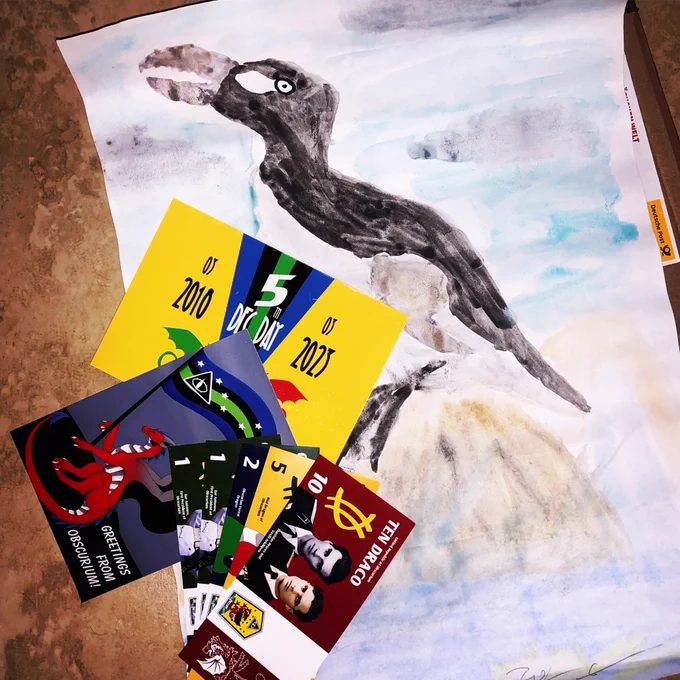
This moment of immense international prestige coincided with another very significant event in the foreign relations of the Empire – the first Cultural Exchange with United Republic of Obscurium, a major European micronation. The event, apart from being enjoyable, established a strong friendship between the heads of state and promoted the exchange of currencies, letters, postcards, and even works of art. Some months later, Oscar I would delivery a short speech during the celebrations of the V Anniversary of Foundation of Obscurium.
In addition to Obscurium, ties were strengthened with the Federal Republic of Forestia, a Brazilian micronation with great potential that eventually joined the Conference of Santiago. It even participated in the voting that determined the succession of the Duke of Frag in the leadership of the organization, which currently has its fourth Secretary-General as Queen Maria of Sildavia and Borduria.
In March, while K.R.O.S.A. organized the Empire’s participation in the “Orion Mission” conducted by NASA, the celebration of Archduke Ari’s birthday, the Emperor’s father and King of Pannonia, included the first bestowal of the Order of the Three Golden Fleece to someone outside the Imperial Family.
In the Imperial Court, Prince Hochbach and Count Szentmária continued to be the greatest hosts of social events, and the Imperial Collection received a kind letter and the famous ribbons of Nosso Senhor do Bonfim from their cousin and friend, Prince Lucas VIII of Woestein. Simultaneously, despite the cultural effervescence at the Court, politically, the Emperor suffered his first defeat in the parliament in the entire history of his reign – a bill authored by him proposing the title of his ancestor Rudolf of Rheinfelden – Rex Romanorum, King of the Romans, to the Emperor of Karnia, was rejected by the majority of the members of the Imperial Diet. The idea was to strengthen the Crown’s legitimacy and its ties with the Holy Roman Empire. With the defeat, part of this cultural movement lost momentum.
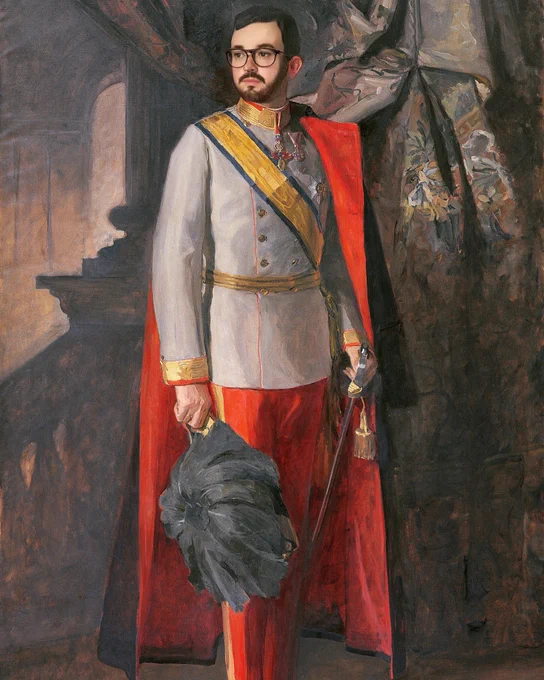
At the end of March, a series of significant dates began to be observed: the announcement that the Empire would attend MicroCon 2023, marking a year since the passing of the famous micronationalist Prince João de Noronha and three years since the foundation of the Conference of Santiago. During this period, among other things, a flourishing of cultural elements focused on imperial nationalism was observed, with an unprecedented production of artistic works from various genres, including idealized images of the Emperor and the creation of the “Imperial Creed,” a pledge of alliance between the people and the monarch in the form of a simple prayer.
In the second half of April, with the consent of the Imperial Diet, the remaining members of Lehmark were invited to continue their micronational activities within the Empire. Also in this month, the Diet concluded its work on the creation of a quality seal for products exported by the Empire.
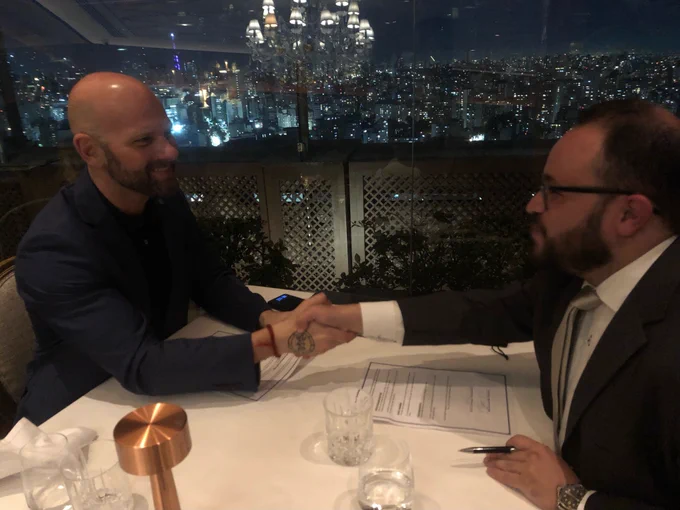
On May 5th, the Emperor and thousands of others attended the coronation of King Charles III of the United Kingdom of Great Britain and Northern Ireland. Less than two weeks later, another foreign monarch was honored in a much closer capacity. Oscar I met with Grand Duke Travis of Westarctica for a dinner at Terraço Itália in São Paulo. Together with Prince Hochbach, the famous American micronationalist was bestowed with the Order of the Three Golden Fleece, becoming the first foreign head of state to receive this honor, while the Emperor received the Order of the Snowflake in return.

In the following week, the State of Delvera celebrated its Tenth Anniversary in grand style, with Delveran Heritage Day and the establishment of a museum to proudly showcase the history of this titan of American micronationalism, which is one of the driving forces behind the Empire.
In early June, the Imperial Diet approved the creation of the Imperial Meteorological Service, an agency to be administered by the Ministry of Internal Affairs, which would analyze weather and seismic conditions within the Empire. However, the work in this month was of lesser intensity, as on June 30th, MicroCon 2023 began.
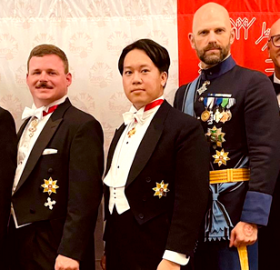
Hosted in Chicago, MicroCon, the most important exclusively micronational event in the world – and its largest edition to date – featured various recreational, cultural, social, and political activities. Beyond reaping rewards in foreign policy, the Imperial and Royal Delegation captured the attention of participants with their dignified demeanor and professional and opulent presentation, marking one of the greatest political victories in national history and justifying the heroic reception of the Empire’s representatives upon their return.

Imperial Delegation with the Grand Duke of Westarctica. 
Imperial Delegation with the Prince of Aigues-Mortes and the Grand Duke of Westarctica. 
Imperial Delegation with the President of Molossia. 
Imperial Delegation with the Queen of Ladonia.
As the Empire approaches another Empire Day, the nation envisions the strengthening of its image as a strong, dignified, and grand nation.


